
Should you trust “the experts” about AI?

Hi dear readers and friends,
Welcome to the Human Override. Twice a month, I share short reflections about AI and society, ending with the “Human Override” (a way to preserve humanity when everything turns synthetic).
New readers highlight: Haygun, AI Specialist | Michael, CTO | Marco, Creative Leader | +64 anonymous legends! Welcome!
STORY
I’ll start with an uncomfortable self-reflection. I spent years collecting degrees and building expertise across physics, statistics, actuarial science, business and computer science. And the more I learned, the worse I got at admitting what I didn’t know.
That’s the paradox of expertise—the very thing that makes you credible also makes you blind.
47% of AI experts say they’re more excited than concerned about AI in daily life. Only 11% of the public feels the same (data from Pew Research).
Who’s right? Maybe neither. Or both. Perhaps experts are just really bad at sharing their enthusiasm with the public!
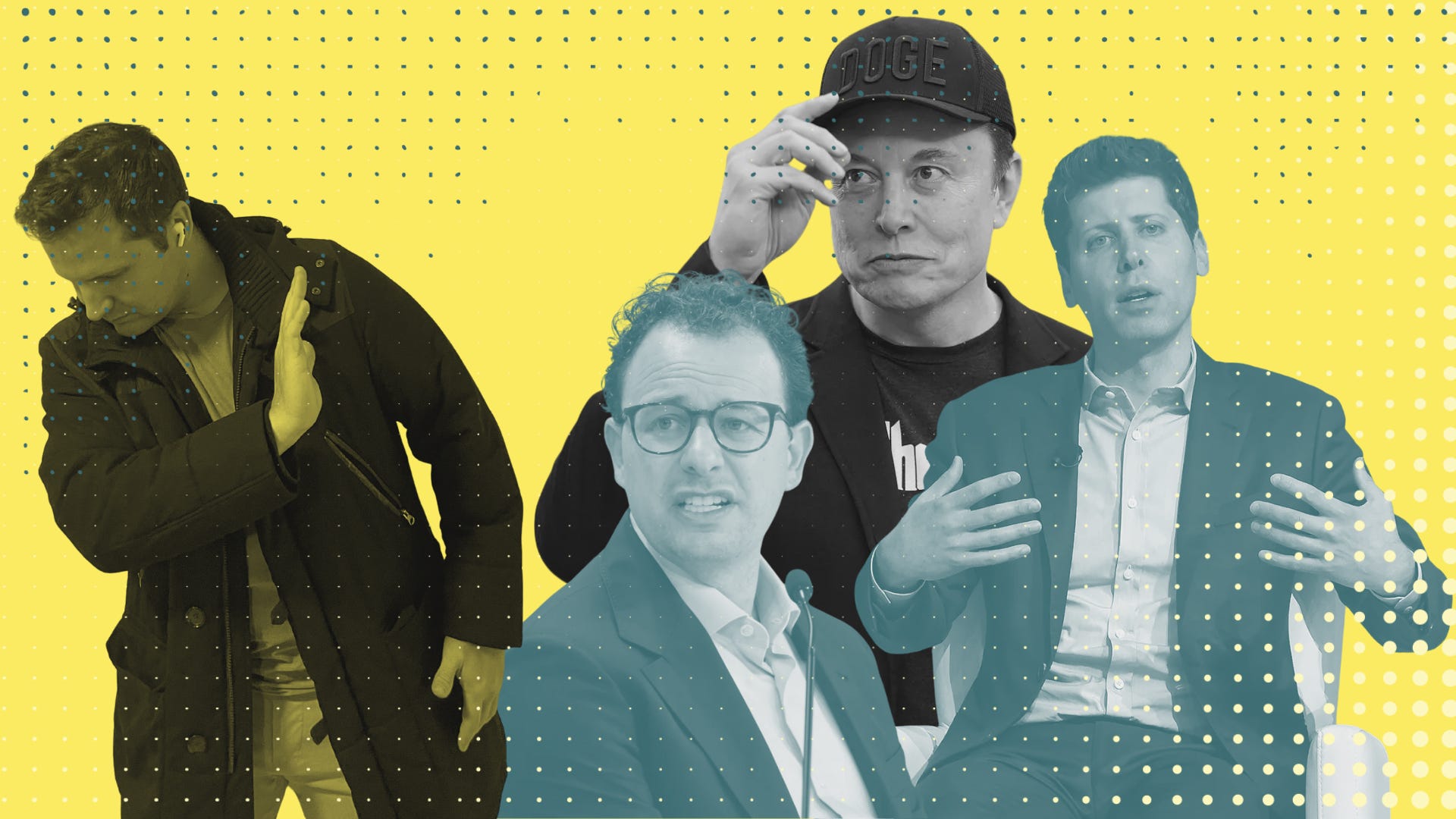
Too many experts I know in AI repost everything Sam Altman, Dario Amodei or Elon Musk says. They get excited when a billionaire CEO drops a vision of the future. Or they cite academics, “godfathers of AI”, like scripture.
But these same experts have apparent conflicts of interest (e.g., research grants to protect, companies to promote, products to sell). There’s massive self-serving interest baked into their narrative. If (when) the house of cards falls, they can’t easily pivot to other work, and “everyone’s got a mortgage to pay” (cit. Thank you for smoking—watch that movie if you haven’t!).
So here’s my confession: I’m nobody special. I don’t run a billion-dollar company. I’m not trying to stay quotable for Wired or keep investors calm. I’ve been an entrepreneur, raised capital, shipped products—but I’ve also taught, debugged, and watched AI evolve from multiple continents and cultures.
I’m a nobody with a newsletter, which might be precisely why you should listen. I have no conflict of interest.
THE HUMAN OVERRIDE
The paradox of expertise happens when deep knowledge causes tunnel vision, bias, and loss of flexibility. You can become so confident that you ignore new information that doesn’t fit, leading to poor predictions.
The Dunning–Kruger effect works both ways. Beginners think they’re more capable than they are because they don’t see the complexity. True experts often underestimate themselves because they do see it.
I’m not immune to this. Writing a newsletter warning people not to trust experts—while asking them to trust me—is pretty ironic.
A Framework to identify who you should actually listen to about AI
Strip away titles and headlines. Here’s the 5-Factor Filter I use:
1. Hands-on experience, little skin in the game
Look for people who can afford to be wrong. If their opinion is tied to stock prices, political office, or tenured legacy, they’ll defend their story even when it’s outdated (or bluntly false).
2. Simplicity
Deep understanding unravels complexity to its essence. If someone needs jargon to sound smart, they probably don’t understand it well enough.
3. Multi-disciplinary rigor
AI intersects economics, linguistics, neuroscience, computer science, engineering, philosophy. If someone pontificates about the future of jobs but has never studied labor economics or policy, take their optimism with a pinch of salt.
4. Reputation across domains
Can this person speak across fields without sounding like a tourist? Authority isn’t earned through TED talks. It’s built by doing serious work that’s respected by different communities (not just Silicon Valley).
5. Humility to update views
Watch how they respond when proven wrong (like Sam, here). Thought leaders worth following evolve. Prophets don’t.
AI isn’t a single field. It’s a system of interlocking impacts. You wouldn’t trust a neurosurgeon to design your national pension system. So why trust a chatbot creator to predict the economic future of humanity?
SPARK
What if we trusted the quiet experts instead?
We’re trained to listen to the loudest voices. But what if the best insight comes from people who don’t get media training?
What if the future of AI governance depends less on founders and futurists—and more on teachers, scientists, philosophers, and civil servants who work without fanfare?
Here’s your weekly provocation:
Who do you quote when thinking about AI? And why do you trust them?
Let me know by replying, and I’ll share with you my list!
Further Reading
The Human Override will always be free. I don’t plan to include affiliate links or sponsor ads—just honest, informal talk. This publication is supported by paid readers, who get access to an AMA session every 5 weeks and paid-only longer essays, like the latest Forms Carries Care. If you like my work, consider supporting as a paid subscriber.
I have a lot of respect for Andrej Kaparthy following his appearance on the Dwarkesh podcast. I think he passionately believes in the human value of AI but he's clear eyed and honest about the fact that we've yet to realise it (on account of the persistent memory problem, the lack of contextual awareness, and so on).