

Who Turned Off the Lights?
The UAE launched a $100 billion AI fund. Australia launched a $30 million safety institute. Both called it a national AI strategy.

Welcome to the Human Override. Twice a month (or less), I share reflections about AI and society, sometimes pointing at battle-tested strategies for leveraging AI without outsourcing your thinking, helpful tips, and ways to preserve humanity when everything turns synthetic. This issue is in a new format. Let me know if you like it, please.
New readers highlight: Rachel R, News Editor | Adriano P, Head of Data | Alessandra G, Creative Director | Jurriën M, CFO | Vedran J, CTO and +84 more amazing people.
Welcome!
When my family recently moved to Australia to support my wife’s academic career, I found the country’s attitude towards AI and the local tech startup scene in a weird place.
Thank God, my wife is faring pretty well. Her recent study on Sydney’s radioactive map was featured in the Sydney Morning Herald yesterday!
But AI… oh my.
Brilliant minds are not missing here. What is missing is the nerve. Australia was once in a remarkable position, with frontier science, top researchers, and a global centre for machine learning, National ICT Australia (NICTA). World-class. Genuinely competitive. Then, in 2014, the government defunded it. It died in 2015.
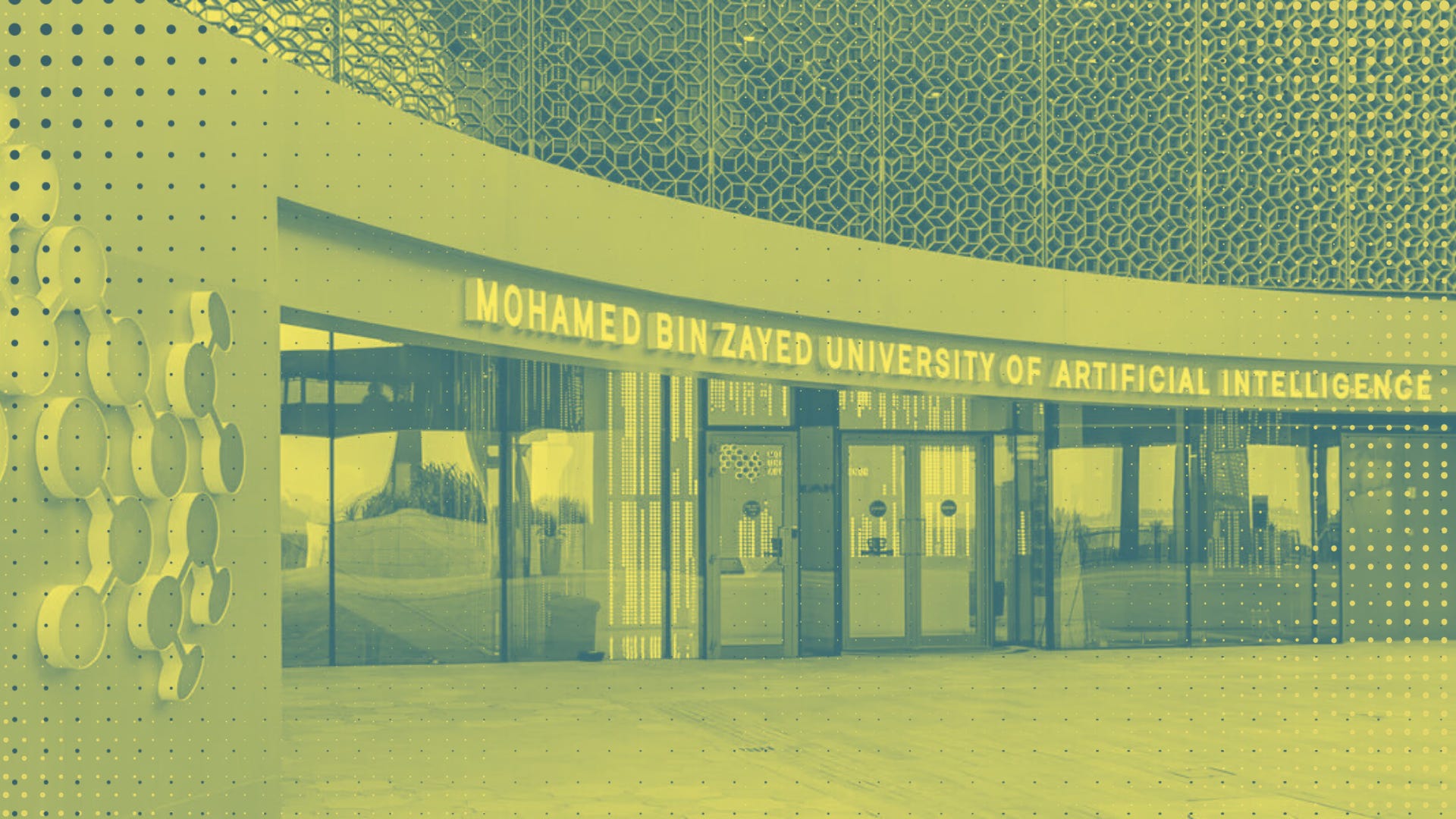
What followed was a diaspora: machine learning researchers scattered abroad, eventually in the early ranks of the AI successes we now associate with the US and the UK. Some ended up at DeepMind, which became “Google DeepMind” precisely in 2014. Some went to Silicon Valley. Some are now teaching at Mohammed Bin Zayed University of AI in Masdar City, the world’s first university dedicated entirely to artificial intelligence. In the UAE.
In 2017, while Australia was still figuring out (or forgetting?) what it had lost, the United Arab Emirates appointed the world’s first Minister of State for Artificial Intelligence. No task forces, committees, consultation papers, think tanks, or Web Summit roamings. A minister!
I remember reading this and thinking: Who does that?
Then I thought: No, the better question is, who doesn’t? Why, when the rest of the world was turning on the lights, did Australia reach for the switch and turn them off?
My recent trip to Abu Dhabi forced the question into sharper focus.
1. The printing press
I visited the Ministry of AI in Dubai, where our guide made a historical observation that stuck with me.
He described the Islamic Golden Age on one side. A civilisation at the absolute pinnacle of human knowledge — mathematics, astronomy, medicine, poetry, philosophy. Baghdad was the intellectual capital of the world. Algorithms are named after Al-Khwarizmi. Algebra is an Arabic word. The House of Wisdom made the European Renaissance possible by preserving and advancing what Greece had started.
On the other side: the printing press.
When Gutenberg’s press spread across Europe in the 1450s, the Islamic world resisted it, mainly due to cultural differences, theological objections, and a bit of guild interests. A sense that the existing methods of transmission were sacred, or at least sufficient. The resistance lasted decades in some places, centuries in others. Meanwhile, Europe printed, published, argued, reformed, discovered, and reorganised.
The reordering of nation-states that followed did not happen because European civilisation was inherently superior. It happened because it adopted and diffused a general-purpose technology while another civilisation, equally brilliant, chose not to.
The people at the Ministry of AI in Abu Dhabi know this history. It is their history. And they have decided, with what I can only describe as extraordinary lucidity, that they will not repeat it.
That is the level of self-awareness driving what is happening in the UAE.
Australia is living another printing press moment. Without even the dignity of a theological argument.
2. A Different Assumption
There is a question underneath all the noise about AI policy, safety frameworks, and guardrail consultations. It is rarely asked directly.
Here it is: do you believe AI is a general-purpose technology, or do you believe it is a product category, one more tool in the drawer?
The answer changes everything.
Electricity was a general-purpose technology. Steam was. The internet was. The printing press, as we’ve seen earlier. These are technologies that do not improve one sector; they reorganise the entire structure of the economy and society and the position of nation-states within it. The countries that understood this early and wired it into everything — their factories, their cities, their institutions — pulled ahead. The countries that waited for theoretical certainty, wavered for cultural reasons, or spent their energy drafting liability clauses spent decades managing someone else’s infrastructure.
The UAE has made its decision: AI is electricity. Therefore, the task is to build it, invest in it, and spread it before the compounding gap becomes too wide to close.
Hence, in 2024, Mubadala and G42 launched MGX, a sovereign-backed investment platform targeting semiconductors, compute infrastructure, and model-layer assets. Not a startup accelerator. National-scale capital, structured around a multi-decade mandate.
That same year, the European Union finalised the AI Act, the most comprehensive AI regulation ever written. The most comprehensive regulation of technology being built somewhere else.
I am sure Brussels is very proud.
3. The Electricity Parable, Or: Who Rebuilt the Factory
In 1882, Edison demonstrated electric lighting in lower Manhattan. In the decades that followed, American factories reorganised their entire floor plans around electric motors. This was not obvious at the time. The transition proved chaotic, expensive, and full of failures.
Other countries adopted electricity, too. But in some places, adoption stayed shallow for reasons that appeared perfectly sensible at the time. The gap did not announce itself. It compounded quietly, for decades, until it was simply too large to close by effort alone. By then, the debate over adopting electricity had become rather academic.
The UAE’s sovereign wealth funds — ADIA, Mubadala, ADQ — were built precisely for this kind of long-horizon bet. Oil revenues were not spent; they were placed into institutions that invest across generations. The logic is clean and worth stating plainly: oil is finite. The returns from oil, placed wisely, do not have to be. The sovereign mandate is to transfer wealth to all future generations of Emiratis. Think about that!
MGX exists because a diversified sovereign fund cannot concentrate heavily in a single frontier theme without distorting its entire portfolio. MGX can. It is built to go deep: semiconductors, compute, data centres, the model layer.
In every previous technology wave, infrastructure captured the durable returns. Applications changed and became commodities; some were disrupted, others got replaced. Whereas infrastructure endured to this day.
4. A Mistake That Sounds Like Prudence
There is a seductive logic to Europe’s position, and I want to take it seriously before I raise my doubts about its efficacy.
Set the standards first. Define the risks. Build guardrails. Then deploy. Reasonable people believe this. Some of them are my friends. I, too, was quite convinced by this approach for some time.
But the argument has a structural flaw. If most of the advanced chips, the frontier models, and the large-scale compute are built elsewhere, then European regulation mostly governs foreign production. You are writing the rules for a game being played on someone else’s court, with someone else’s equipment, by athletes who trained in someone else’s gyms. The referee matters less than you think, and less than the players know.
Moreover, risk becomes comprehensible through use rather than through theory.
Electric grids improved because engineers built them and fixed failures in real time. Aviation became safer because aircraft flew and incidents were investigated. The pattern is consistent across every engineered system in history: you learn by doing, under supervision, with accountability. You do not learn by waiting until the system is perfectly understood, because that moment never comes.
Therefore, the countries deploying AI in their ports, energy grids, hospitals, and procurement systems as operational layers are also the countries developing the most accurate understanding of where the risks actually reside. Exposure is part of risk management. It has always been.
Australia faces its own version of this problem, probably because, with its deep pension funds, careful governance instincts, and a resource-based economy, it has not yet felt the urgency. But, in a world where compute capacity becomes the new defining resource, what exactly is being exported?
5. AI Literacy
There is one argument for the regulatory-first approach that I genuinely respect. If ministers and civil servants do not understand what a language model actually does, what its failure modes are, what the cost of running it at scale looks like, they will either avoid it entirely or outsource it entirely. Both outcomes are bad. In fact, the second outcome — outsourcing without understanding — is arguably worse than not adopting at all. It is the worst of both worlds: dependency without capability.
Literacy is infrastructure. The White House understood this and embedded AI training across federal agencies. The UAE’s AI Strategy 2031 includes adoption goals across sectors precisely because technology adoption and diffusion need a workforce capable of using it.
A bureaucracy that does not understand the tools will not govern, regulate, or deploy them well. This is the strongest argument the regulatory-first countries have — and they are largely wasting it by leading with compliance requirements rather than capability building. Start with literacy. Then build. And the two feed each other.
6. The Only Question That Remains
Sovereignty used to mean control of territory. In the 21st century, it may mean something else: control of the layer on which everyone else depends.
If you do not own the infrastructure, you manage someone else’s. If your institutions cannot use the technology, they are governed by those who can. If your capital does not fund the build — the compute, the literacy, the diffusion — it ends up funding the application layer: volatile, replaceable, and always one disruption away from irrelevance.
The rebuilt factories pulled ahead because they understood that a general technology cannot be fully understood from the sidelines. You learn it by using it, at scale, with accountability, and the willingness to fail forward and fix what breaks.
Some countries are embedding AI into the structure of their economies.
Others are writing the footnotes.
The footnotes will not be finished in time.
Interesting sources to discover more:
UAE National Strategy for Artificial Intelligence 2031 and Ministry of AI guidance
US Department of Labour’s AI Literacy Framework, released 13 February 13:
DOL press release: dol.gov/newsroom/releases/eta/eta20260213
Training and Employment Notice TEN 07-25 (the official guidance document): dol.gov/agencies/eta/advisories/ten-07-25
Full framework PDF: TEN 07-25 complete document
This post writing: L2 (learn about my AI scale here)