
What Skills Are Relevant Building Now?

Dear reader,
Before we get into numbers and forecasts, let me share why I care about this.
We are all standing on shifting ground, watching work change beneath our feet. I don’t want this to feel like another abstract report tossed your way. I want to walk through it with you, as if we were talking over coffee.
SIGNAL
The World Economic Forum's Future of Jobs Report 2025 sets the tone: by 2030, 170 million new roles will be created globally, while 92 million jobs will be displaced. That nets out to 78 million new roles. But (a big ‘but’) some estimate nearly 40% of core skills across all jobs are expected to change.
What will look increasingly valuable? Critical thinking, resilience, flexibility, and social influence. All deeply human, deeply integrative skills. In a parallel 2025 McKinsey analysis, AI capabilities continue to expand, but effective deployment still hinges on what they call "superagency" (humans empowered with tools, not replaced by them).
In this context, professionals who combine broad capabilities with focused expertise—T-shaped individuals—become essential. And for working parents, this hybrid model isn’t optional. It reflects how real careers evolve when responsibilities multiply.
STORY
Let me share a more personal example.
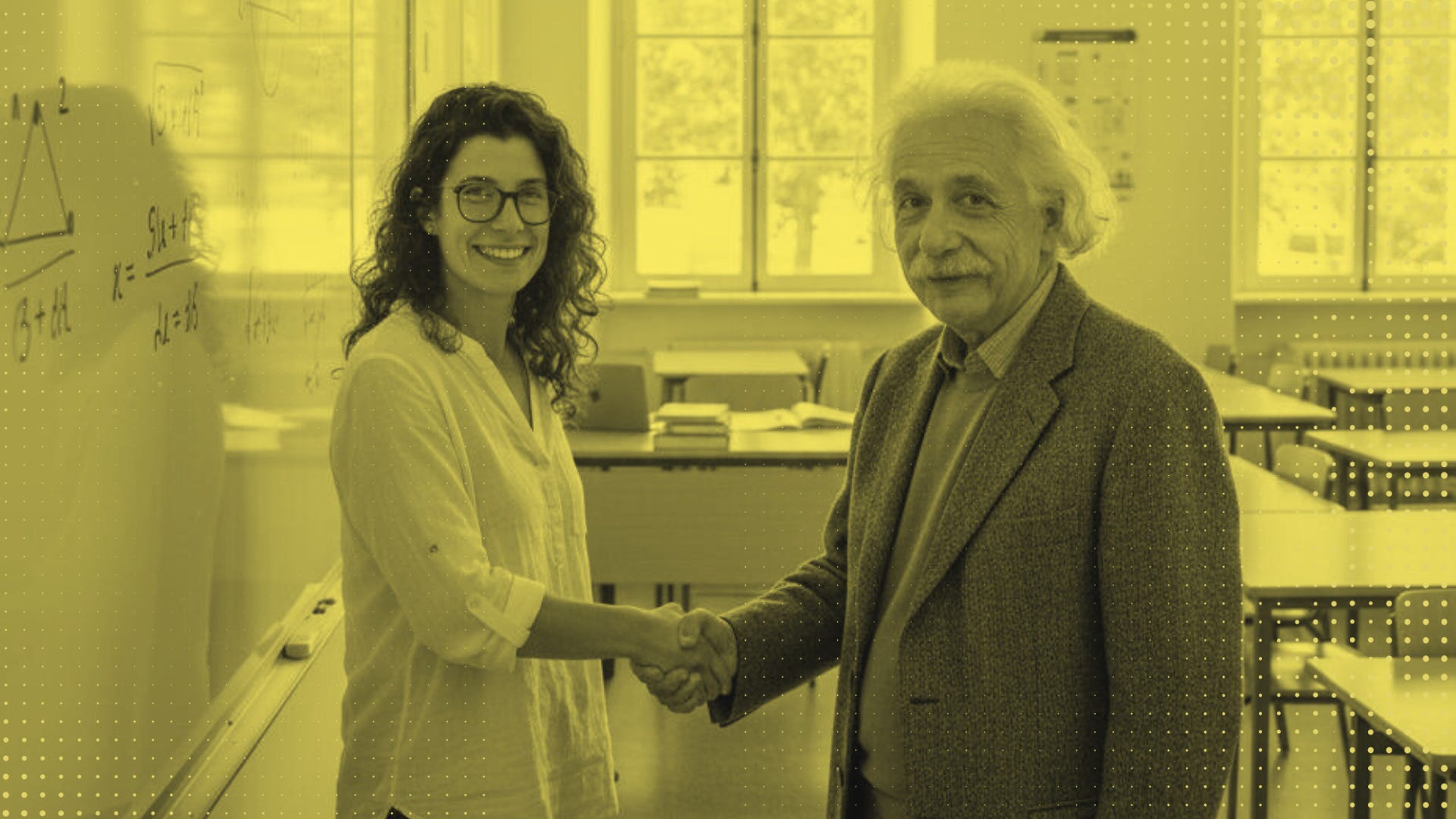
My wife is a physicist, and back in our university days, we were taught that to be truly excellent in science, you had to be like Einstein—brilliant in one narrow field, obsessively focused. All our professors were like that: technically outstanding, but many of them couldn’t manage a basic conversation or group dynamic. Some were outright hostile.
She studied in that environment, mostly male-dominated, always under the impression that she lacked something. That sneaky, induced weight on the shoulders that others, especially the guys who get straight 'A's on all exams, were better than her. But many (more than expected) of those "vertical geniuses" didn’t make it past the early stages of their careers. They had the grades. And they lacked trajectory.
She did. She went on, unapologetically. She persisted through the impossible academic funnel, and she’s now a senior lecturer on a tenure-track to becoming a professor. And here’s what’s remarkable: over the years, the praise she’s received hasn’t only been for her lab work or technical contributions. It’s for how she builds environments. How she listens. How she draws deep, thoughtful discussions from students and colleagues.
That part of her skill set, the wide horizontal stroke, was never in the syllabus. But it’s what made her resilient, respected, and indispensable. The tech world, still obsessed with ultra-rationalism and depth-efficientism, could learn a lot from this.
THE HUMAN OVERRIDE
Let’s make this practical. If you lead a team, if you’re in transition, or if you’re managing home life and a career, here’s a three-part model I use: Shape. Stretch. Sustain.
1. Shape: Know where your depth lies.
Focus matters. What area have you spent years in? What space do you move in intuitively? That depth (be it compliance, user research, marketing or procurement) becomes your core. It doesn’t need to be sexy. It needs to be real.
2. Stretch: Build breadth across adjacent areas.
Don’t try to become everything. Learn just enough in nearby fields to connect dots. That might mean improving your financial literacy if you’re in HR. Or learning basic AI tooling if you’re in marketing. It’s not about adding certifications for a meaningless LinkedIn show. It’s about being able to cross the hallway and speak your colleague’s language.
3. Sustain: Protect your ability to keep going.
This is where many burn out. Especially caregivers. If your calendar is a disaster, fix that first. Time-block your deep work. Build agreements at home. Treat recovery as part of your job. Don’t aim to be T-shaped every day. Grow into it over quarters.
The systems around us still lag. Few policies genuinely support skill reinvention at mid-career, especially for those stepping back in after time away. We need better scaffolding. But while we wait, we design our own.
And let me add this: I know because I’ve taken many such risks myself. I worked in large corporates, launched startups, joined non-profits, and even did a PhD in my thirties. Each role had a depth component—as an individual contributor in machine learning and data science—but alongside that I built breadth: leadership, operations, finance, marketing, product management, user research, partnerships, writing. This mosaic makes me hard to categorize for an HR professional, but it makes it much easier for me to find meaningful work where I truly want to spend my energy.
SPARK
Imagine a future where professional growth isn't measured in titles, but in cycles of depth and breadth.
Where stepping out to raise a child, care for a parent, or start something small isn’t seen as a pause, but as a different kind of training. Leadership, negotiation, systems thinking: they happen in the office, yes, but also at the kitchen table.
Some reads worth your time:
Harvard Business Review: Introducing T‑Shaped Managers: Knowledge Management’s Next Generation
Harvard Business Review: When Generalists Are Better Than Specialists, and Vice Versa
MIT Sloan Management Review: How to Develop Continuous Learners
P.S. If you’re feeling overwhelmed by the AI noise, its claimed capabilities, and the plethora of tools available, or if you're struggling to make AI work for your specific context, I can help.
I offer limited consulting slots to executives and professionals seeking to transition from AI confusion to discernible results. No
generic frameworks. Just personalized roadmaps that match your skills, job-to-be-done, and timeline.
Only 2 slots in September remaining. They fill fast.
Book a discovery call - takes 2 minutes.