

The AI Bubble Survival Guide: Lessons From Companies That Actually Made It
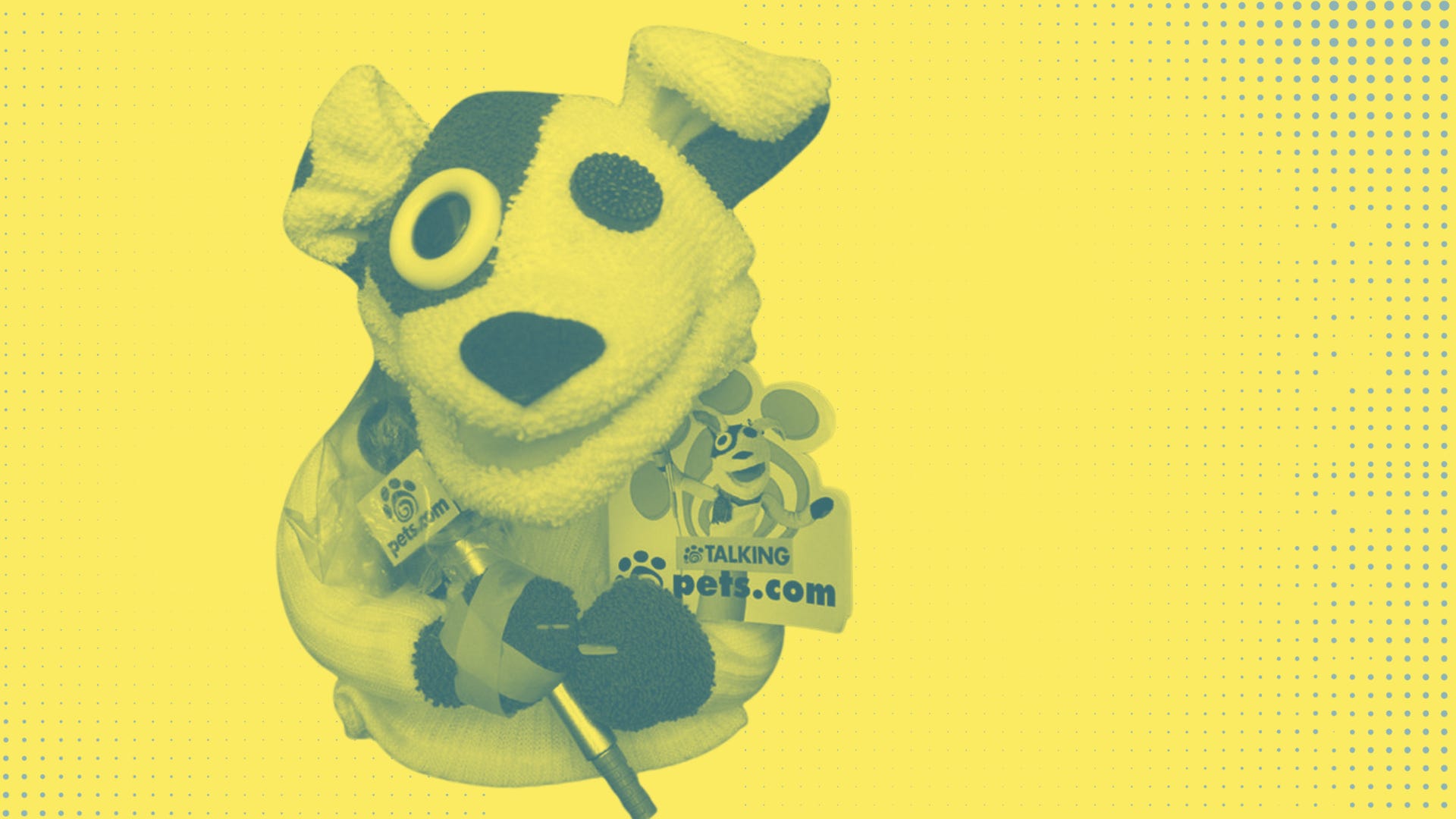
Amazon raised $108M and survived. Pets.com raised $300M and died in 9 months. The patterns from 2000 map perfectly to AI in 2025.

Dear Readers,
I need your help.
Every brand now asks: how do I get cited by ChatGPT?
That’s AEO (Answer Engine Optimisation). It’s no longer about ranking on Google. It’s about controlling if and how AI talks about your brand when millions ask it questions.
I’ve spent several months deep in this. What have I learned? Most companies are getting it completely wrong.
I’m launching a monthly private newsletter. Invite-only. For Founders, CMOs, and Heads of Growth who need to control their brand voice in AI conversations (before their competitors do).
Here’s where you come in: I need 50 of the right people. Know a founder or CMO who needs this? Reply with their name or make an intro. I’ll handle the rest.
Your thank you: Exclusive invitation to my next Ask Me Anything webinar (usually reserved for paid subscribers only). Bring your toughest questions!
Help me build this. Thank you!
Now, on our weekly Human Override:
SIGNAL
Two signals this week cut through the noise:
First, the bubble is real. The Financial Times made it explicit: “’Of course it’s a bubble’: AI start-up valuations soar in investor frenzy.” Start-ups with minimal revenue are commanding massive valuations. $161 billion in VC investment this year. Ten companies are approaching $1 trillion valuations each. The Bank of England warns this AI bubble rivals the 2000 dot-com peak.
The numbers don’t match the promises. Not yet.
Second, the long game is already advancing. And it’s quiet. A report by the OECD (from 2023, not too long ago, but not so recent that it's overly hyped) shows AI is already accelerating scientific discovery, in a way that is “sometimes shocking.” And if you’re already using AI tools in every part of your work and personal life, you may well have already experienced the transformation that is happening beneath the bubble noise.
What this means for us: We’re caught between two forces. The bubble (massive capital, inflated valuations, near-term collapse risk) contrasts with the real potential (slower, more profound change in knowledge work and human-machine collaboration).
How to survive the bubble burst AND capture what actually matters beyond it?
STORY
My wife is a university lecturer in physics. Last month, she needed to refresh material she hadn’t seen in fifteen years. She opened Claude and ChatGPT instead of her old textbooks.
The AI helped her visualize concepts differently and explore explanations she hadn’t considered before. She found teaching approaches that were previously inaccessible. It was fast and genuinely useful.
But there’s no ROI here. No revenue increase. No cost savings. At least now. But think about all those students she taught? What they’ll accomplish. And her teaching style. She might become a pro in a couple of years, whereas professors usually take several years repeating the same course to achieve the same level of mastery. Real value that doesn’t show up in quarterly reports.
This creates a problem for organizations. Boards want hard numbers. They want proven business outcomes and measurable impact. But in knowledge work like teaching, strategy, analysis, decision-making, research, AI’s value comes from expanding what people can do and how they do it.
Most of this value gets buried under the AI slop flooding the internet right now. The genuine utility becomes invisible silently, and over longer time horizons.
Your move: Find AI use cases that expand human capability. Invest quietly, and think long term.
THE HUMAN OVERRIDE
If you feel caught in that seemingly impossible space between innovation and risk, your real question isn’t “do we invest in AI?” It’s how do we invest smartly, protect the enterprise, and build something that lasts?
I’ve spent the last week digging into what separated Amazon and eBay from Pets.com and Webvan. The patterns are clear, and they map directly to what we’re seeing in AI right now.
Here’s your human override:
Build optionality, not lock-in. The dot-com survivors had business models that worked across multiple scenarios. eBay’s auctions worked whether the economy was up or down. Amazon’s low prices and convenience worked in boom or bust. Your AI strategy should work whether GPT-7 is transformative or incremental. Whether Anthropic and OpenAI merge or compete. Whether regulation arrives or doesn’t.
Practically: use multiple models. Build abstractions that let you swap providers. Capture the institutional knowledge about what works and what doesn’t in formats you control, not in vendor platforms.
Separate genuine capability from valuation bubble. Online shopping was real in 2000. The valuations weren’t. AI’s capability is real in 2025. The $1 trillion startup valuations aren’t. Your job is to capture the capability without paying bubble prices. That means building internal expertise, running small experiments, and being patient. The companies that rushed to “transform with AI” in 2023 will look like the ones that built million-dollar websites in 1999.
(Pro tip) document your AI failures systematically: create an internal wiki of every AI experiment: what we tried, what failed, why, what we learned, what we’d do differently. Make this searchable. This institutional knowledge becomes your moat when everyone else is still learning your lessons.
For your career, become domain expertise + AI fluency. The survivors of the dot-com crash weren’t pure technologists or pure business people. They understood both the technology AND the business fundamentals. Jeff Bezos understood retail economics and technology architecture. Pierre Omidyar understood community dynamics and platform mechanics.
You need the same hybrid. If you’re in finance, become the finance person who actually understands how LLMs work, where they fail, and how to architect around limitations. If you’re technical, become the engineer who understands P&L, customer economics, and business model viability.
The people who survive technological transitions don’t need to predict the future. They’re the ones who understand fundamentals in many domains and can navigate uncertainty.
The bubble will burst. You’ll have built real capability that survives the correction.
Back to work!
SPARK
If AI valuations collapse tomorrow, what remains in your organisation that still delivers value?
Is it human-machine collaboration patterns? A culture of experimentation? A documented scratchpad of learnings? Or just an investment line item that looks shiny today but evaporates tomorrow?
Let me know!
The three-year test: If AI valuations collapse tomorrow and your vendors double their prices, what remains in your organization that still delivers value? Is it: - People who know how to work with AI as a tool (survives) - Documented patterns of what works and what fails (survives) - A culture of experimentation and learning (survives) - Vendor dependencies and SaaS subscriptions (evaporates) The companies that emerge stronger won’t be the ones who “transformed” fastest. They’ll be the ones who learned fastest while spending least. What’s your answer?
PS—My hot take: the most interesting things that will survive the pop and bring insane long-term value are AI security, some AI agents, creativity and education enhancements, and everyday life robotics. And yes, search engines will eventually be replaced by AI conversations.
One more suggested reading: