

In Conversation with Laura Miller
(in conversation with 🎥) AI ethicist and I discuss ethics and AI, moving from questions about technology’s limitations to broader conversations on ethics in AI and technology.

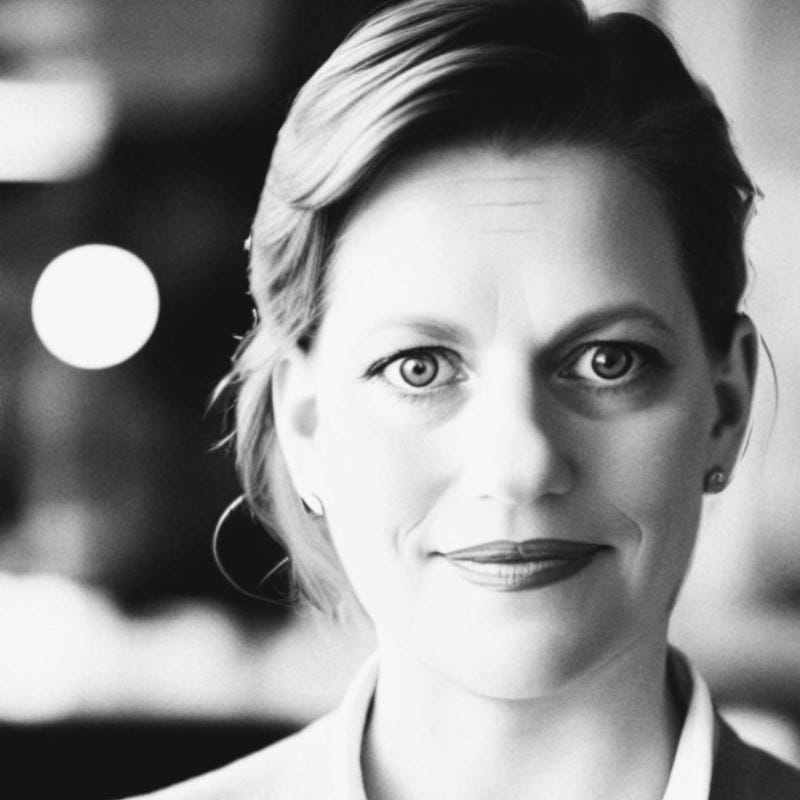
This is an edited transcript from a conversation featuring Laura Miller, a renowned ethicist with a focus on technology and AI.
Our discussion begins with what sparked her interest in ethics and AI, and moves into multiple topics close to my heart: the impact of AI on social media, particularly concerning Generation Z, highlighting the issues of harmful content and the challenges of balancing free speech with addressing harmful material. Laura also shares her human-centric approach to problem-solving in social media, emphasizing the importance of understanding genuine human needs. We also touch on parental concerns about kids’ technology usage and parenting in the digital age, focusing on setting boundaries, monitoring online activities, and being proactive in guiding children’s technology use.
Let’s dive in, pulling away the glamor of benchmarks and understand what’s behind them.
In Conversation with Laura Miller
Alberto Maria Chierici (AMC): Laura, you have such an interesting story about how you got into ethics. Can you tell us about that professor and how it shaped your thinking?
Laura Miller (LM): I got started in AI through ethics as it is taught in philosophy. So I’m actually what you, well, what I call myself is an ethics-first AI ethicist. I was recently asked to share this great story from my first class in philosophy. I had a professor who decided to get our attention by running into a wall during class. He asked whether the wall stopped him because he thought it would, because we thought it would, or because it was an actual wall. That moment made me reflect on where our limitations truly lie and how we perceive them.
“It’s one thing for AI to perform well in controlled experiments with specific tasks, but quite another to handle the complexities and nuances as human intelligence.”
AMC: On LinkedIn, you recently challenged the idea that AI is beating humans on tests like bar exams. This is how we got connected. Can you say more about how you came about the study and what this means for the AI hype?
LM: The AI hype often centers on benchmarks and tests, but these are not reflections of actual capabilities. It’s one thing for AI to perform well in controlled experiments with specific tasks, but quite another to handle the complexities and nuances as human intelligence. In practice, ChatGPT would, at best, be a C student - that’s not acing a test. We need to critically assess the claims of developers and understand the broader implications of blind acceptance of declarations.
AMC: In simple terms, why do you think comparing to AI on humans on these tests might not tell the whole story?
LM: Human thinking involves elements of creativity, empathy, and ethical reasoning. But it also conveys meaning and nuance attached to consequences of actions, choices, and decisions. AI is unable to attach the same meaning to its replies, it is unaware of consequences from actions, and will not bear the brunt of its decisions or recommendations. These are areas where AI simply cannot compare to humans. So, comparing AI to humans using something as simple as a multiple choice test can be misleading and doesn’t capture the full picture of what it means to be intelligent or human.
AMC: You’ve worked with big organizations like NASA and the State Department. How has this experience changed how you look at AI development?
LM: These institutions see the value of ethics in their work. Remember, I came to ethical technology from an ethics program. So, seeing ethics in action at scale is wonderful to witness and contribute to. I really believe that they should be seen as an example that ethics belongs at our workplaces, in our work, and in our day-to-day lives. NASA is embracing IDEA (inclusion, diversity, equity, and access) and the State Department is partnering with learning organizations and professional organizations dedicated to social enterprise. This work has underscored just how many of our challenges are universal and require global understanding.
AMC: Let’s talk about some real-world issues you’ve posted about - AI, teens, social media. There’s a product called ZYN that’s advertising nicotine to kids as young as 12. How do you see AI playing a role in this kind of targeted advertising?
LM: AI algorithms are incredibly effective at targeting specific demographics based on their online behavior. Unfortunately, this means that harmful products can also be marketed to vulnerable groups, like teenagers. The sticking point is that parents are tasked with tackling their children’s online use, and parents aren’t seeing the same things online - that includes ads. It’s a stark reminder that using algorithms to promote products can be problematic. When it comes to children it can be outright harmful and dangerous. The promotion I shared online was an influencer promoting nicotine as stress relief to 6th graders worried about passing a spelling test. We can do so much better.
AMC: TikTok has been in hot water over dangerous challenges for teens. What role has AI played in making social media dangerous for young people?
LM: On TikTok, viral challenges are really problematic and often dangerous. The challenge is that algorithms will promote viral content. And what’s viral? The dangerous content. From stealing things to hitting teachers - even gun violence - it is all promoted via algorithms, and then it goes viral. While some have stopped to consider what a diet of only the most viral moments online would be like, the magnitude of the mental health epidemic that Gen Z faces should be a clear reminder that there is so much work to be done in this area.
AMC: There was a case where Air Canada tried to say their chatbot was a legal entity. What do you think about the idea of AI having legal rights or responsibilities?
LM: AI cannot make restitution to others for its mistakes and can only be deployed by another. So, the person releasing it is the one with the responsibility for it. But rights for AI, some object to that because, well, it’s a computer. If we want to have some fun, we can ask if we might be in a position to grant AI rights as we would birds, animals, and other species. That’s a philosophical one but it’s interesting to consider a point where we could get there. I think we must be careful about what we claim AI can do or be, but I am also concerned that the choice of rock or man is not going to be the choice in front of us. Instead, we may be asked to consider that AI could be more like a kitten or puppy and due some rights in the future.
“We need to ensure that AI systems are designed and used in ways that respect human dignity, promote fairness, and prevent harm/ It’s about creating technology that serves humanity, climate, society - not building whatever we can and waiting to see what will happen with it.”

AMC: In your upcoming book “AI Ethics in Action,” what’s the main message you want readers to understand about AI and ethics?
LM: The main message of my book speaks to understanding the foundations of this technology and preparedness to engage with it. But also to the larger message of accepting the responsibilities of accepting this technology into our workplace and world. We need to ensure that AI systems are designed and used in ways that respect human dignity, promote fairness, and prevent harm. It’s about creating technology that serves humanity, climate, society - not building whatever we can and waiting to see what will happen with it. The best solutions solve problems, it will be interesting to see what problems AI will solve.
AMC: Looking ahead, what’s your biggest hope for how AI could positively impact society? And what’s your biggest concern?
LM: My biggest hope is that AI can be used to solve some of the world’s most pressing problems from healthcare to climate change to social injustice and harms. However, my biggest concern is that without proper ethical oversight, AI could exacerbate and cause significant harm, damage the environment, and harm all that it touches. Both are possible. The only thing standing between those outcomes is ethical decision making. It’s possible that AI will teach us that doing ethics matters.
AMC: If you could give one piece of advice to companies developing AI, what would it be?
LM: My advice would be to prioritize ethics in every stage of the AI lifecycle and adoption. Engage ethicists and diverse stakeholders in the process, and be transparent about the capabilities and limitations of your AI systems. Ensuring that your technology benefits society as a whole should be the ultimate goal. Your choices will determine our future, so make the best ones that you can with what you know. Don’t follow the hype and instead use ethics as a guide. It is the right tool to meet this moment.