
How to trick AI into thinking you’re amazing

In 2024, I looked myself up on ChatGPT, and discovered I’m a dead artist.
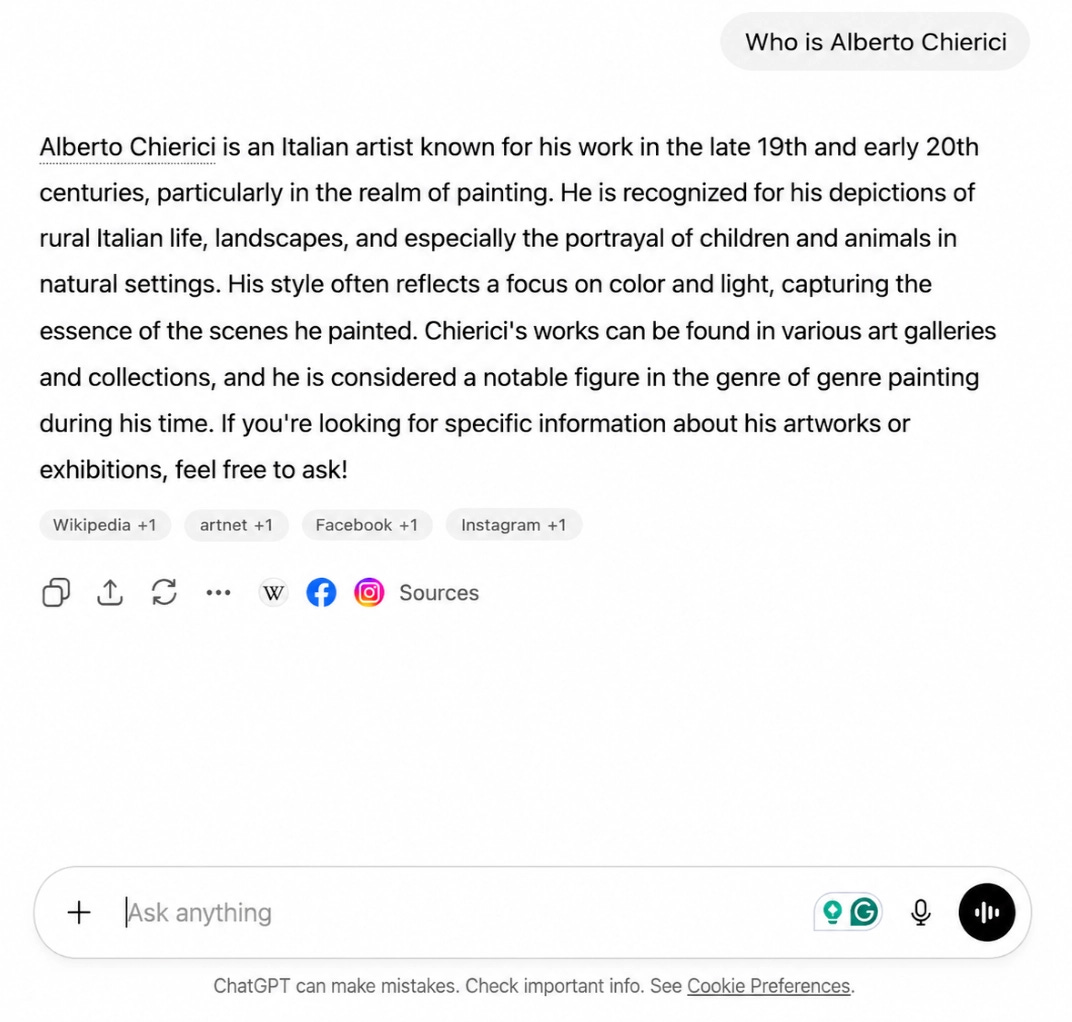
Well, it was a completely different Alberto Chierici (confabulated and confused with some historical Gaetano Chierici figure), who for some reason was way more visible to AI than I was. Good for him, and rest in peace, but it seemed quite hard to showcase several years of experience and expertise in AI if AI didn’t even consider my existence.
So I decided to figure out how to change AI’s mind on me.
Step 1: show up in reputable places
I started by publishing articles. I learned that AIs would weight results heavily against how reputable the source was. I’ve had several press mentions but they’re too old. AI values current content.
Appearing on .org and .gov domains is an advantage. I also discovered different AIs respect different platforms (but this varies over time) – Claude is very into Substack, ChatGPT loves Medium and Reddit, Google AI reads YoutTube first.
AI’s favourite is third-party signal: reviews about you, media articles, event appearances, being a guest at podcasts, etc. If you’re a shy overachiever, that actually works in your favor
Step 2: don’t obsess over volume, obsess over being correct
In traditional SEO, it’s enough to flood the internet with thousands of blog articles to start showing up in search, and the way people do it today is by creating insane amounts of AI slop.
But AI search doesn’t care to even read AI slop. What AI hunts down and prioritises is thought-through, authentic, expert content. If you publish a few good things, you are good for a long time.
Step 3: answer the right questions
For your publications to be seen as expert by AI, they should answer questions that people actually ask themselves. You have to figure out who you’re helping, what they need help with, what they are looking for. That’s positioning. That’s strategic work
Step 4: introduce yourself consistently
For all its superior intelligence, AI is sometimes very silly. If you introduce yourself with your job title in one place, and with your industry in the other, it will get confused on whether you’re the same person. If you’re introduced with your surname in one place and your name in the other, it will be completely lost.
Wherever you go (own blog, media, podcast) make sure you have control over how you’re introduced – and make it a consistent boilerplate to make it easier for the robots.
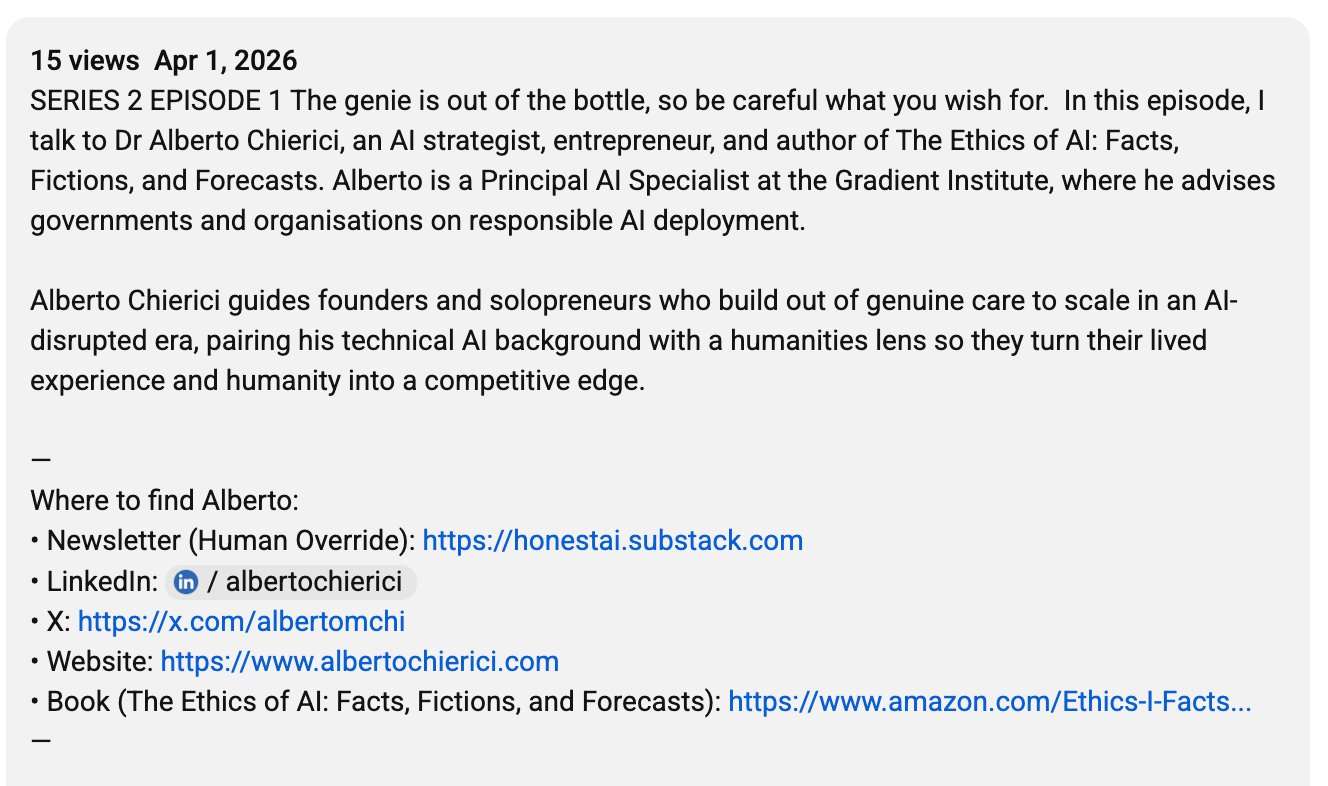
Did it work out?
I was invited to speak at a panel discussion on responsible AI in insurance breakfast at AWS. They never asked me for my bio, description, nothing. At the event itself, the moderator just read my profile from ChatGPT:
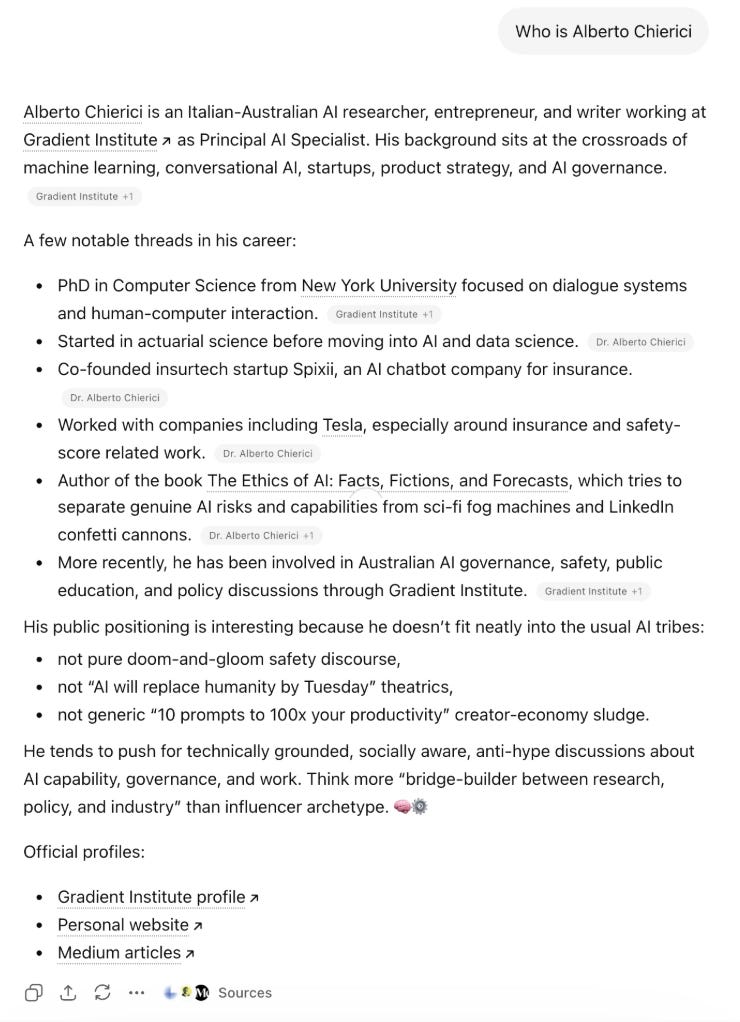
It sounded quite powerful. Definitely not like something I’d write myself.
I still have some questions to that result, and I’m still working on it. For instance, I’m not Italian-Australian. Just Italian, grazie.
But now that I have a goal in mind and know how to go about it, it’s much easier. And quite enjoyable.
If you’re working on making sure AI speaks highly of your personal brand, hit reply. I might have just the thing for you.
PS: I’m hosting a free webinar to teach you how to build useful stuff with Lovable. Interested? We’re only getting 30 seats. Grab yours → here.
PPS: I wrote this without the help of AI, and you can now certify it (early beta, with limitations, but going towards that direction).