
🧠 Deeper Than Code
Why AI assisted work is failing us, and how to fix that

Dear reader, I recently came across a fascinating study. And even better, one of my go-to podcasters, Cal Newport, breaks down the main findings in his last episode of “Deep Questions.”
It highlights where AI coding falls short, the gap between expectations and reality, and Cal shares his perspective on why this is the case. Read on:
SIGNAL
The AI boost that wasn’t
METR recently published a study on AI coding assistants (tools like GitHub Copilot, Coursor, Claude Code). The goal: measure how they affect software developer productivity. The finding: counterintuitive.
Developers felt 20-30% more productive. But actual results showed they were 20% slower when coding with AI tools. And, if you read the study, notice how non-experts in the task, like economists, thought developers could become 40% more productive!
The illusion of progress is seductive, especially when it moves fast and feels intelligent. But this gap between felt productivity and real output is growing. It’s the same mirage across industries from marketing copy to legal research to management dashboards. And let’s not even talk about the big scam of “personalization at scale” (broader topic, I promise I’ll cover in a future issue).
Now, pair this with Cal Newport’s latest podcast, where he introduces the term “cybernetic collaboration” for working with AI-assistive tools. Newport warns that these AI-human hybrid workflows degrade the one asset that consistently drives breakthrough results: deep work.
(And it’s not just about focus. It’s about meaning, leverage, and self-respect.)
STORY
I met Deep Work in 2016. We’re still close.
It was 2016 when I first stumbled on the concept of deep work. I was a startup founder , juggling product deadlines, investor calls, and (like many of us) a mounting inbox that felt like a second job.
That year, Cal Newport published Deep Work (I incorporated my company the week after he published his book, coincidentally), and it hit me like a diagnosis. Not in a motivational sense, but like a medical chart that explained why I could go days feeling busy and yet make no progress on things that mattered.
So, I made a change.
I began blocking long, uninterrupted hours every morning. No Slack. No meetings. Just one high-value task, every day, without exceptions. Slowly, I shifted my calendar, my team culture, and even my self-image around this practice.
It was brutal at first. (Especially, as a founder, saying “no” is a real dilemma.) But the results were wildly asymmetrical.
I shipped better products, made decisions with more clarity, and more than once, saw my “deep work sprint” solve problems that previously took weeks.
When generative AI came on the scene, I noticed something odd. Everyone was trying to get AI to do the deep work. Write books. Build strategies. Design user flows.
But I found more value using AI around deep work, not inside it.
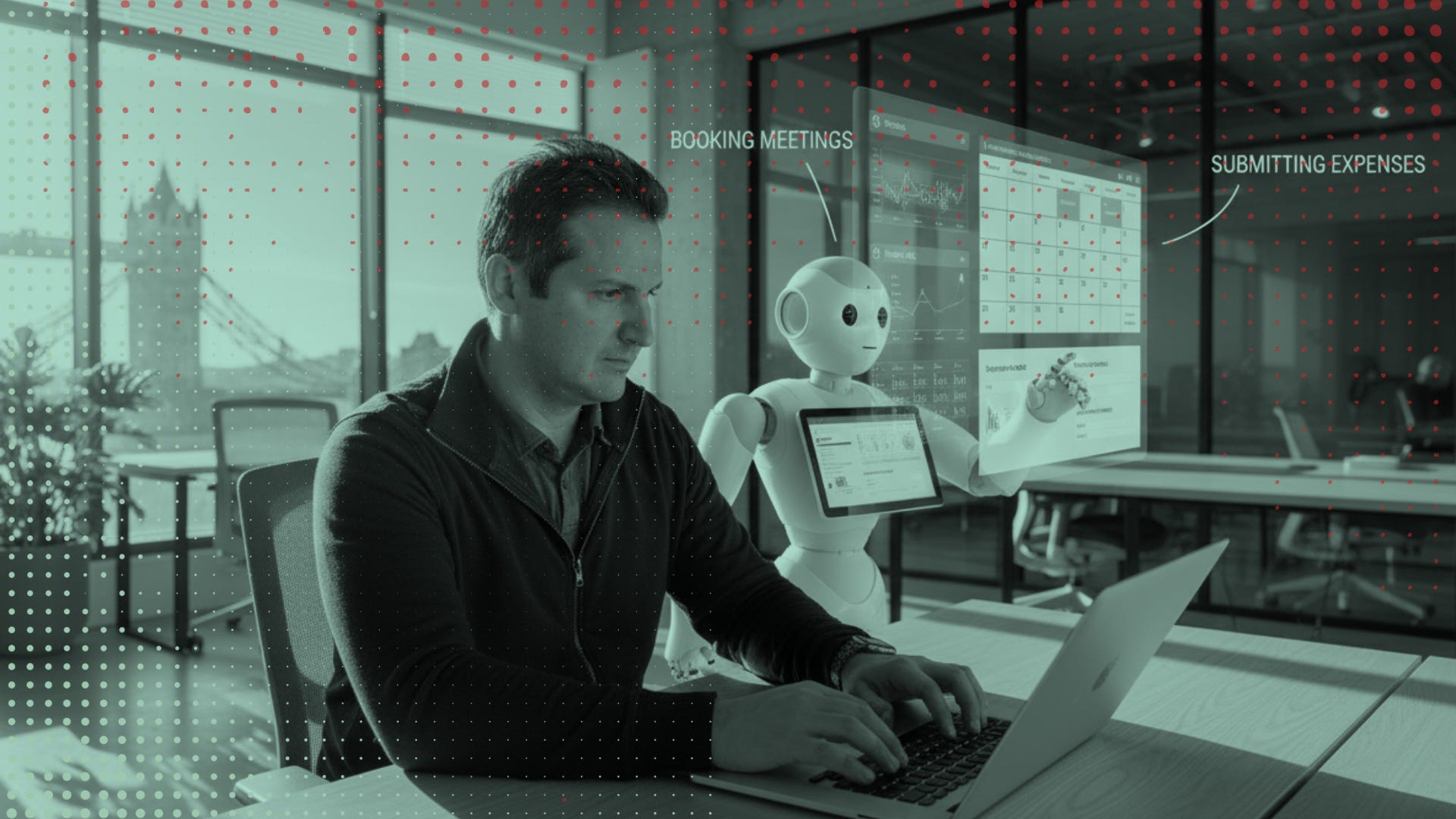
Filing expense reports? AI. Summarising meetings and sending that (very useful!) follow-up email immediately? AI. Drafting boilerplate investor decks? AI. Even for this newsletter, AI helps compile citations, format markdown, sometimes transforming my brainstorming into decent writing, other times adjusting a few paragraphs here and there (incredibly beneficial for a non-native English writer, as it teaches me new things in the process).
But the core thinking? Still mine. Always mine.
I wrote my PhD dissertation, completed my book manuscript, held a demanding job at Tesla, and parented three kids during the pandemic, with schools closed. No AI could’ve done any of that. What made it possible wasn’t “intelligence” but smart tech protecting my intelligence: it was protected attention.
AI is good. Deep work is better.
THE HUMAN OVERRIDE
Deep work creates asymmetric results. Here’s how to defend it.
AI promises leverage. But not all leverage is created equal.
Writing 10 mediocre things quickly is not the same as writing one masterpiece. Speed ≠ value.
Here’s the uncomfortable truth: certain things are meant to be hard. Not because hard is noble, but because difficulty is often the filter for quality.
Think of a high-trust investment memo. Or a legal argument with long-term implications. Or a new scientific hypothesis. None of these benefit from faster drafting alone. They benefit from clearer thinking.
Here’s how I structure my work around this principle:
THE “AI SUPPORT STACK” FRAMEWORK
Use AI to defend, not displace, your deep work.
Identify the kernel: What’s your actual deep work today? Hint: It’s the 1–2 activities that, if you were to cancel your entire week, you’d still want to do. That’s the work that moves your life forward.
Label your maintenance tasks: Emails, scheduling, CRM updates, slide formatting, meeting summaries, internal docs. These are necessary but low-leverage.
Automate the margin: Feed all maintenance into AI tools. Use custom GPTs / Claude projects, templates, summarizers, or whatever helps streamline, but only on margin tasks.
Isolate your core sessions: Create daily blocks (90–120 minutes) where you do one deep thing without any interface that could route you to distraction. Yes, that means AI off.
Reinforce with ritual: Make your deep work a ritual, not a resolution. Light a candle (the right smell matters). Change locations. Use a specific playlist (Alpha waves is my go-to). Rituals reduce the cognitive tax of starting.
Track output, not time: Don’t measure how long you sat at your desk. Measure what’s done. If you’re writing, count finished pages. If you're coding, ship features. Keep it tangible.
Trust the asymmetry: One hour of true deep work often outweighs ten hours of shallow tinkering. Don’t measure yourself by visible busyness. Look at cumulative results over weeks.
SPARK
If AI clears the fog, what will you paint?
Here’s something I ask myself every Friday:
If I automate every low-value task in my week…
If my AI handles slides, meeting notes, documentation, expense reports and reminders…
What could I do with the time I win back?
Not in terms of “productivity” (that word is losing meaning).
But in terms of creation.
Could I design something elegant?
Could I write something that matters?
Could I sit in silence long enough for a new idea to emerge?
This is the provocation AI gives us. Think about it: not just “more,” but more meaningful.
Here are a few great resources to reflect on this week:
Ali Abdaal: AI Tools That Save Me 10+ Hours Weekly - similar workflows I use for writing. Notice the use of voice notes, which can be applied to many more things (documents, emails, meeting memos…).
Your deep mind is still the best tech you own. Use it accordingly
P.S. If you’re feeling overwhelmed by the AI noise, its claimed capabilities, and the plethora of tools available, or if you're struggling to make AI work for your specific context, I can help.
I offer limited consulting slots to executives and professionals seeking to transition from AI confusion to discernible results. No
generic frameworks. Just personalized roadmaps that match your skills, job-to-be-done, and timeline.
Only 2 slots in October remaining. They fill fast.
Book a discovery call - takes 2 minutes.